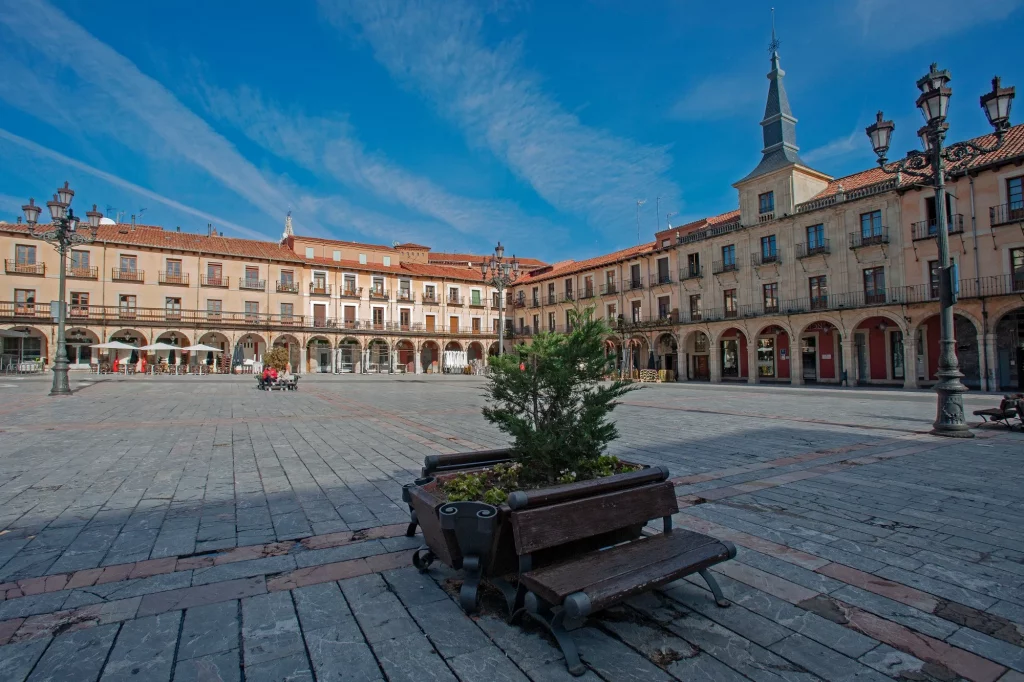
Jabalquinto Palace in León is one of those façades that makes you slow down. Carefully dressed stone, wrought-iron balconies and a confident arched portal compose a street front that concentrates the city’s patrician memory. It isn’t an isolated monument; it converses with narrow lanes, pocket squares and traditional shops across the historic centre.
For the curious traveller, the building works like a quick class in noble domestic architecture—less spectacle, more craft. The interest lies in the proportions of the openings, the cornice that caps the elevation and the way light changes the relief through the day.

Location and urban character
Set right in the old town, the palace is part of everyday life. Around it, people move between cafés, bars and small stores, producing a genuinely local scene. It’s a good place to reset the pace of your visit: slow down, look closely and tune your eye to materials and details.
The surrounding fabric is compact and pedestrian, with León’s typical blend of stone, timber and iron. The palace façade—sober yet emphatic—adds order and continuity among buildings from different periods, proof that the historic centre isn’t a stage set but a lived-in city.
Origins and evolution
Like many palatial houses in León, Jabalquinto originated with a lineage that had the means and the will to represent its status. Architecture served two roles: prestige towards the street and a clear domestic organisation inwards. Over time, targeted refurbishments adapted rooms and finishes to new needs while preserving the building’s original reading.
That continuity explains why the palace still “fits” the neighbourhood today. It doesn’t try to dominate; it holds the street’s profile and acts as a calm urban reference—easy to recognise, easy to locate.
Exterior architecture: what to look at
The arched main doorway frames the entrance and anchors the composition; surrounding it, ashlar stonework orders the wall with precise joints. Wrought-iron balconies provide rhythm and hint at the interior hierarchy: principal rooms on the noble floor, secondary spaces above. There’s no excess, just accurate proportions that give the whole its poise.
Notice the stringcourses and the crowning cornice: those horizontal lines “stretch” the façade and help it visually settle. In low sun, mouldings and corbels gain volume and the stone warms—perfect conditions for detail photography.
Interior: a house organised around its patio
Access to interiors can vary with current uses, but the logic is clear: a central courtyard as climatic and social heart, perimeter circulation and a staircase that leads to the piano nobile. The scheme allows cross-ventilation, daylight and a sequence that moves from public to private.
Joinery, parapets and stonework complete the story. This is not a palace designed to dazzle but to endure: honest materials, good masonry and a layout that ages well without losing dignity.
Practical tips that truly help
- Best light: early morning and late afternoon. To keep lines natural, shoot with “normal” focal lengths (35–70 mm); for details—ironwork, coats of arms—an 85–105 mm isolates textures nicely.
- Respect the setting: it’s a residential area; keep voices low and avoid blocking doorways while you photograph.
- Hunt for small clues: knockers, hinges, corbels and mason’s marks tell stories—give yourself a few minutes to find them.
Stay comfortably close to everything
If you want a central base that lets you enjoy León at a relaxed pace, check León Apartamentos—thoughtfully designed, city-centre apartments that make heritage, cafés and tapas effortless to reach.
https://leonapartamentos.com/