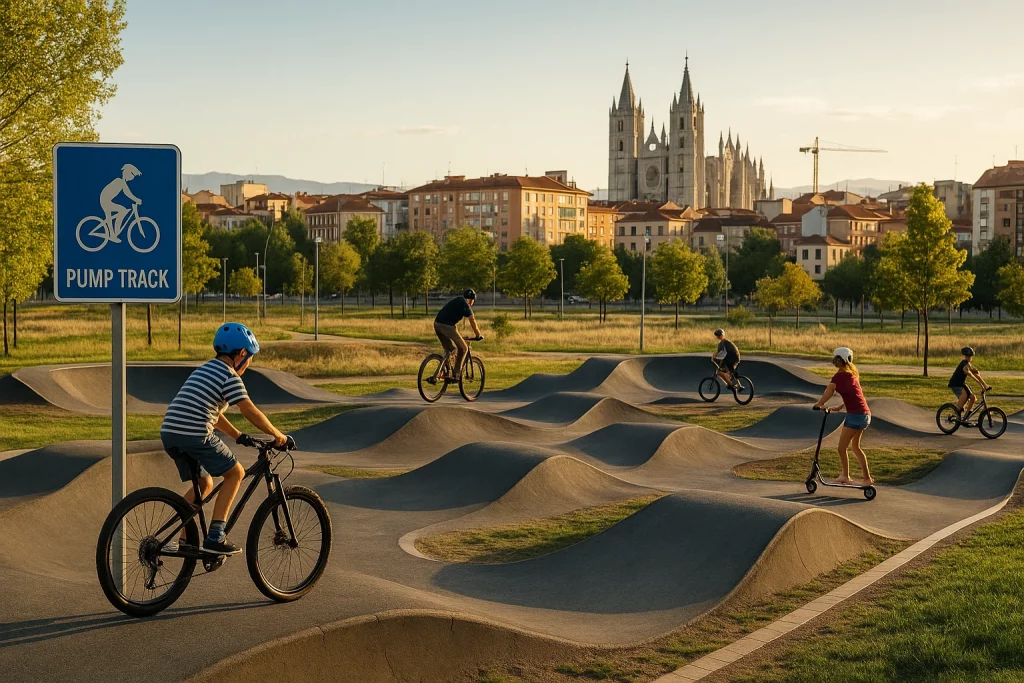
In just a few years, pumptracks have gone from niche facilities to one of the most beloved urban spaces for cyclists, skaters, and scooter riders. The idea is simple and addictive: ride a loop of berms and rollers and build speed by pumping with your body instead of pedalling or pushing. That compress–extend motion—sink into the bike or board on the downs, extend through the crests—sharpens balance, coordination, and terrain reading while giving you a fun, low-impact workout suitable for almost all ages. In León city, you can already enjoy several places to practice, and there’s a new pumptrack planned in Puente Castro that will add more meters of track and separated areas for different skill levels.
How a pumptrack works (and why it’s so engaging)
Riding well on a pumptrack isn’t about brute force; it’s about timing. You compress the bike or board as the terrain drops and release that energy as it rises, gaining speed without pedalling. Repeating this pattern lap after lap develops your core stability, strengthens arms and legs, and polishes skills that translate directly to mountain biking, the skatepark, and even city riding. Because the circuit is shared and the laps are short, the social element is strong: you see new lines, learn to respect turn-taking, and improve almost without noticing. For kids, it’s an outstanding school of motor skills; for adults, it’s a short, incredibly effective session that fits easily into a busy day.
Basics, safety, and good etiquette
Even though it’s pure fun, a pumptrack needs order and courtesy so everyone enjoys it. Enter only via designated points, ride in the posted direction, and never stop on a berm or blind crest where others can’t see you. Helmets are non-negotiable; if you’re new or riding with children, add gloves and knee pads—slips on asphalt or composite surfaces are part of learning, and it’s better to be protected. On damp days, assess the surface first; if there are puddles, wait until it dries to avoid damaging the track and reduce the risk of falls. Keep your gear in good shape (sensible tyre pressure, tight bolts and axles) and remember the space is shared: look over your shoulder before merging, keep runs short so others can ride, and exit cleanly so the next rider can flow in safely.
Locations in León city: what to expect at each spot
Papalaguinda (city centre). Set on Paseo de Papalaguinda by the Bernesga riverside, right next to the skatepark and the calisthenics area, this is the most urban, accessible pumptrack in town. The layout complements the skatepark with nimble berms and friendly rollers that allow smooth laps at low to medium speed. It’s ideal for quick sessions before or after work or for visiting with the family, since you can rotate between sports areas and the river walk. Being central, it gets busier on sunny afternoons; if you’re bringing kids, mornings and weekdays are calmer. You’ll find benches, seasonal shade, and plenty of ways to get there on foot, by bike, or by bus.
Eras de Renueva – Parque Santos Ovejero. In the heart of Eras, Parque Santos Ovejero hosts a compact modular pumptrack that’s perfect for focused technique: short, intense repetitions dial in your pump and cornering. The configuration makes structured practice easy—five laps on pump timing, five on berm lines, five combining both with short recoveries off the track. It’s particularly comfortable for beginners or anyone after a mid-afternoon active break. The park includes green areas, playgrounds, and walking paths, so everyone in the group can choose their plan without straying far. Being within a residential area, the vibe is generally family-friendly and respectful—great for learning at an easy pace.
Puente Castro (new project). The Puente Castro neighbourhood will gain a larger pumptrack on a municipal plot near Calle La Flecha, envisioned as a broad perimeter loop with multiple interior lines separated by skill level (beginner, intermediate, advanced). The concept combines wide-radius turns—allowing more speed and cleaner reading of the line—with linked tables, gentle step-ups/step-downs, and rest zones for families. Plans include accessibility improvements, provision for lighting to extend use into autumn and winter, and landscape integration that connects with nearby cycling routes (La Lastra and riverside paths). Once open, it will be the go-to place for longer sessions and technique clinics, with enough space to separate levels without interference.
A simple 60-minute progression plan
Structure your ride to get the most from it. Start with 10–12 minutes of general warm-up (ankle–hip–shoulder mobility, two easy laps, and a couple of short sprints off the track). Spend the next 15 minutes on conscious pumping: roll in slowly and focus on compressing on the downs and extending on the ups, no pedalling; if you track laps, look for consistent times and smoothness. Use the next 15 minutes for berm technique: enter high, look to the exit, keep pressure on the tyres, and avoid braking inside the corner; repeat until you feel that “flow.” Finish with 10–12 minutes combining both, and if you’re comfortable, try variations such as shifting weight slightly forward on entry or “pecking” the crest to gain a touch more speed. End with five minutes of cool-down and light stretches. Do this two or three times a week and your confidence will ramp up quickly.
Tips for families and first-timers
With children, pick low-traffic hours and a track you can see clearly from the outside so you can coach as they roll. Set bar height so they can flex and extend comfortably, and avoid bikes or scooters that are too heavy for them to move dynamically. Keep rules simple: enter only when the track is clear, exit at the marked point, never stop on crests, and raise a hand if they need help. Bring water, sunscreen, and a light layer in spring and autumn—the session flies by, and León’s temperatures can shift quickly. For adult beginners, three short blocks (5–6 laps each) with plenty of rest between sets is the safest way to avoid arm pump and keep technique tidy.
Seasonality, equipment, and small tweaks that matter
León enjoys many sunny hours, but winter mornings can be cold and the surface a touch more slippery. In those conditions, reduce speed slightly and delay your berm pressure a fraction so the tyres don’t wash out. In summer, watch pressure: dropping your MTB tyres by a couple of PSI can increase grip without killing speed; on skateboards, medium bushings help read the terrain better. If you’re sharing with kids, consider pedals without aggressive pins, a firm-soled shoe, bolts checked tight, and always a properly fitted helmet. Avoid riding with mud-caked tyres or super-soft knobs that tear up the surface—these tracks are for everyone, and a bit of care goes a long way.
A perfect day on wheels in León
A great plan is to hit Papalaguinda in the morning—combine it with a riverside stroll and a coffee nearby—then move to Santos Ovejero in the afternoon for a quieter, technique-focused session. When Puente Castro opens, save it for weekends or those afternoons when you want lots of minutes on the bike with longer lines and varied rhythms. The day completes itself: tapas toward sunset, a walk through the old town, and, if you’ve still got energy, one last lap when the crowds thin out.
📌 Stay in the city centre and ride León “by pump”
León Apartamentos is your perfect base for a wheels-first getaway: modern, fully equipped, central apartments a short walk from Papalaguinda and just minutes from Eras de Renueva and Puente Castro. Travelling with bikes or kids? Ask about units with multiple beds, storage-friendly layouts, and early check-in / late check-out (subject to availability).
Book direct with no commissions at leonapartamentos.com and blend sport, tapas, and heritage in one stay.