The ramo leonés is one of those symbols that make Christmas in León unique. Wood, candles, ribbons and a sung offering fill churches and squares with an atmosphere that is solemn and festive at the same time. If you visit León in December, you’ll see ramos in homes, parish churches and cultural events, a sign of a tradition that is very much alive.
At this time of year the city dresses up in lights: carols ring out, Christmas markets showcase local crafts and the ramos appear like warm beacons in doorways and chapels. Walking through the old town —among nativity scenes, hot chocolate and choirs— is the best way to understand why this offering remains the heart of Christmas in León.
What is the ramo leonés
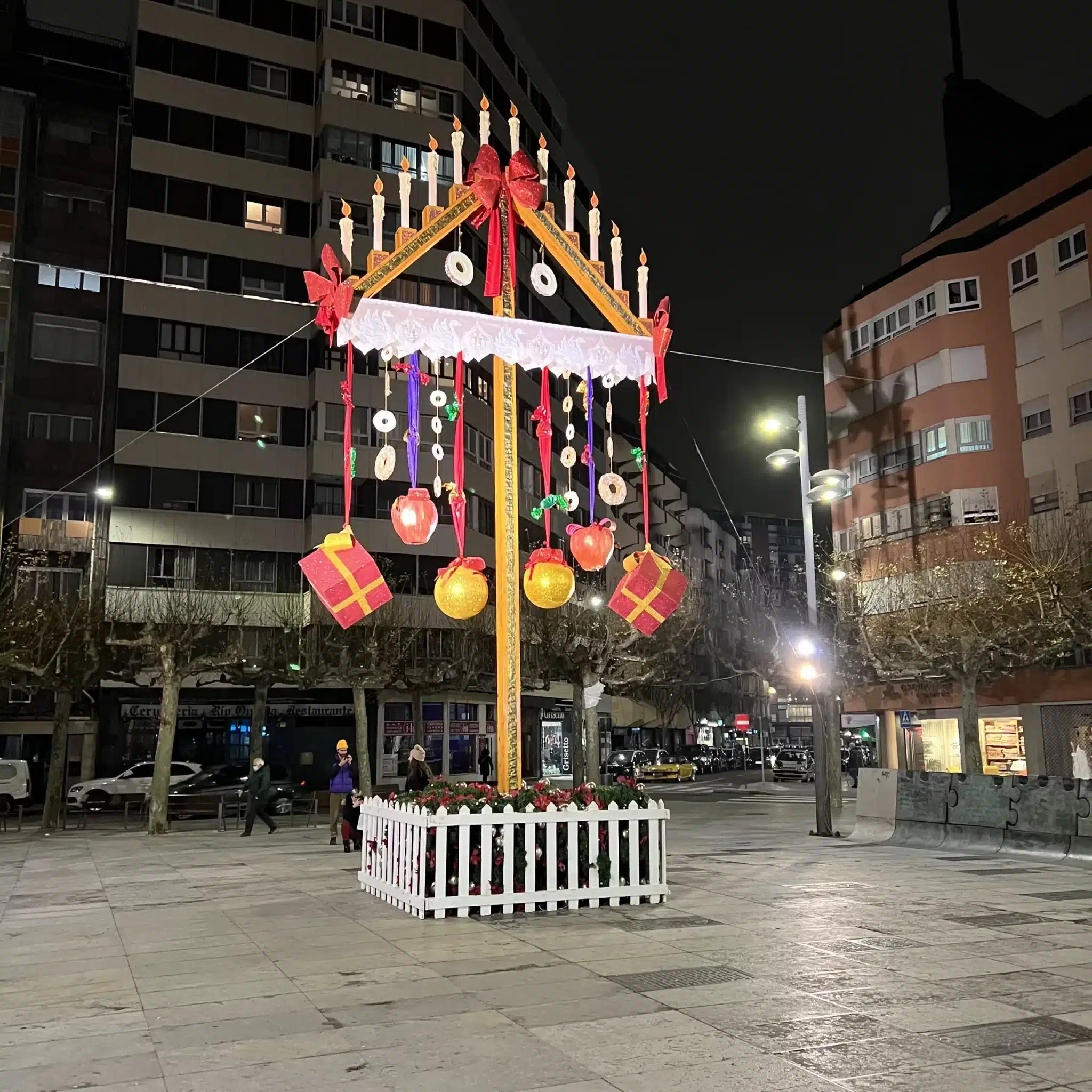
The ramo leonés is a wooden structure decorated and offered during the Christmas season. It goes far beyond a simple ornament: it combines an object, a song and a communal rite, and expresses wishes for prosperity in the coming year. Its presence creates a shared language that everyone recognises, from mountain villages to city neighbourhoods.
Although today we associate the ramo with Christmas, in Leonese tradition there were ramos for different moments in the yearly cycle. The Christmas one has best withstood the passing of time, perhaps because it works so well with candlelight, the introspective feel of winter and the idea of community. That vitality explains why more and more families and groups revive it every year.
In many places the ramo is not just a visual element, but also a reason to gather. Building it, decorating it and carrying it involves several people, from the person who makes the frame to those who sing during the ceremony. In this way, the ramo becomes a bridge between generations.
Origins and meaning
The ramo has its roots in ancient nature celebrations that, over time, were integrated into Christian tradition. You can still sense that continuity in the symbolism of light, fruit and offerings, which speak of gratitude for what has been received and hope for the new cycle. The result is a piece that preserves very old echoes while remaining fully contemporary.
Its main purpose is to offer. To offer time in the making, beauty in the decoration and voice in the singing. It is a gesture that reminds the community that a good life is built together, through small shared acts. That is why it feels so at home in festive and family settings.
The recent resurgence of the ramo is also linked to the need for local symbols. Faced with global decorations, the ramo leonés brings identity, memory and a recognisable aesthetic connected to the territory. It is, ultimately, living heritage.
What it looks like and what it includes
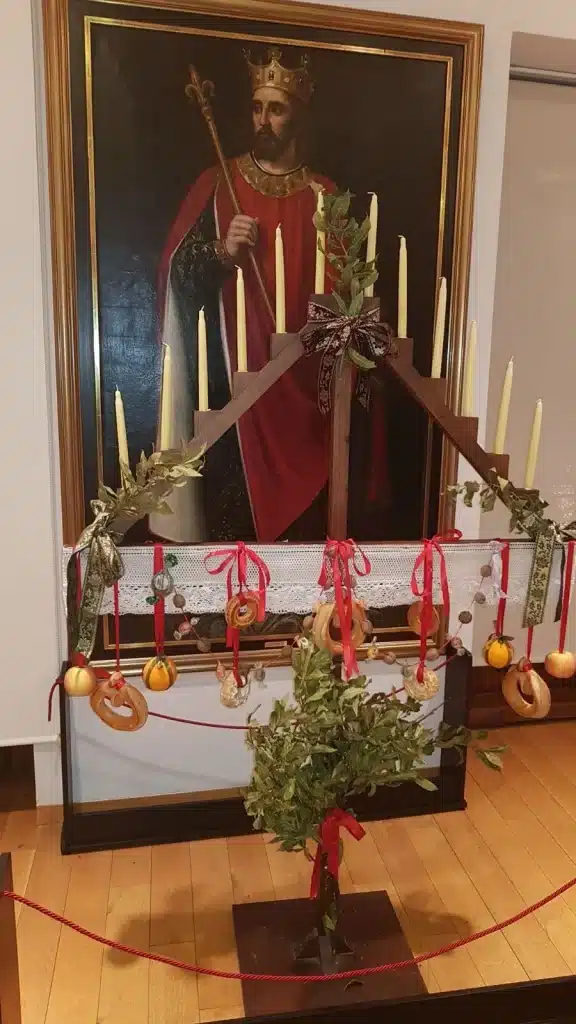
The most widespread shape is triangular, although there are semicircular or square variants depending on the area. They are usually mounted on a base or stand and topped with candles that gently light up the whole piece. The wood, usually light in colour, allows the ribbons and ornaments to stand out.
The characteristic elements are the twelve candles, one for each month of the year. They are accompanied by coloured ribbons, green branches, fruit, small doughnuts or other little gifts, depending on local custom. The ideal composition seeks balance: neither overloaded nor sparse, but harmonious and intentional.
In recent years contemporary versions have appeared: minimalist ramos, small sizes for apartments, or ones that incorporate handcrafted textile elements. There are even models with LED candles to ensure safety indoors without losing the magic of the light.
The ritual and the song of the ramo
The high point comes when the ramo is presented at mass or during a community event. It is usually carried by one person or a group, who bring it to the altar or designated place. That short procession has powerful symbolic value: the community sets out to offer the best of itself.
The canto del ramo (the ramo song), with lyrics that give thanks and ask for protection, is the soundtrack of the offering. In many villages there are local versions that mention the people carrying it, the elements of the ramo or the patron saint of the place. Repeating it year after year means children and adults learn it almost without realising.
Outside churches, the ramo can also be inaugurated at home or in a business with a few words of good wishes. It is a simple way to keep the gesture of offering alive, adapting it to modern times and everyday spaces.
Where to see it today in León and the province
In the city of León, throughout December, you will often find ramos in parish churches, cultural activities and temporary exhibitions. Strolling through the historic centre during this time lets you discover different styles and sizes, from the most traditional to modern interpretations.
In the province, many villages organise their own ramo with local participation. There the communal side is especially clear: neighbours are invited, the song is rehearsed and the wooden frame is prepared in advance. If you visit with respect and curiosity, you will be warmly welcomed.
For those who want to learn more, several museums and cultural centres in the province display ramos and explain their regional variations. It is a great plan for cold days: learn indoors and then go out to see them in real life.
How to set one up at home while honouring the tradition
Start with a stable frame, in proportion to the space where you will place it. Make sure it has a solid base and decide from the start where the candles will go. If you choose real candles, take care with distances, draughts and surfaces; if you prefer LED candles, you gain peace of mind without losing the visual effect.
The decoration should be meaningful. Twelve candles, well-placed ribbons, a touch of greenery and, if you like, fruit or small doughnuts. Better less and harmonious than a lot and chaotic. Choose a colour palette that fits the room and keep the elegant simplicity that characterises the ramo leonés.
When you inaugurate it, take a moment to share a short text of thanks and good wishes with your family or friends. You can draw inspiration from traditional songs, adapting them to your own story. That small ritual turns a decoration into an experience.
Craftsmanship and responsible shopping
Supporting local artisans is a wonderful way to keep the tradition alive. At workshops and Christmas markets you will find ramos made with quality wood and carefully finished details. Ask about the origin of the materials and the making process: it will lead you to meaningful stories.
If your space is small, look for compact or wall-mounted ramos. There are also contemporary designs that, without losing the essence, incorporate current details. What really matters is that the piece feels authentic and respectful of the craft.
Looking after your ramo when Christmas ends will extend its life. Dust it gently, store the ribbons and protect it from damp and dirt. With a little care, it will stay with you for many years and become a cherished object every winter.
Ready to experience Christmas in León?
At León Apartamentos we are waiting for you in central locations, just a short walk from churches, museums and all the Christmas atmosphere. Comfortable, bright, fully equipped apartments for couples, families or friends. Book your stay and discover the ramo leonés, nativity scenes and the magic of winter, all within walking distance from your door.