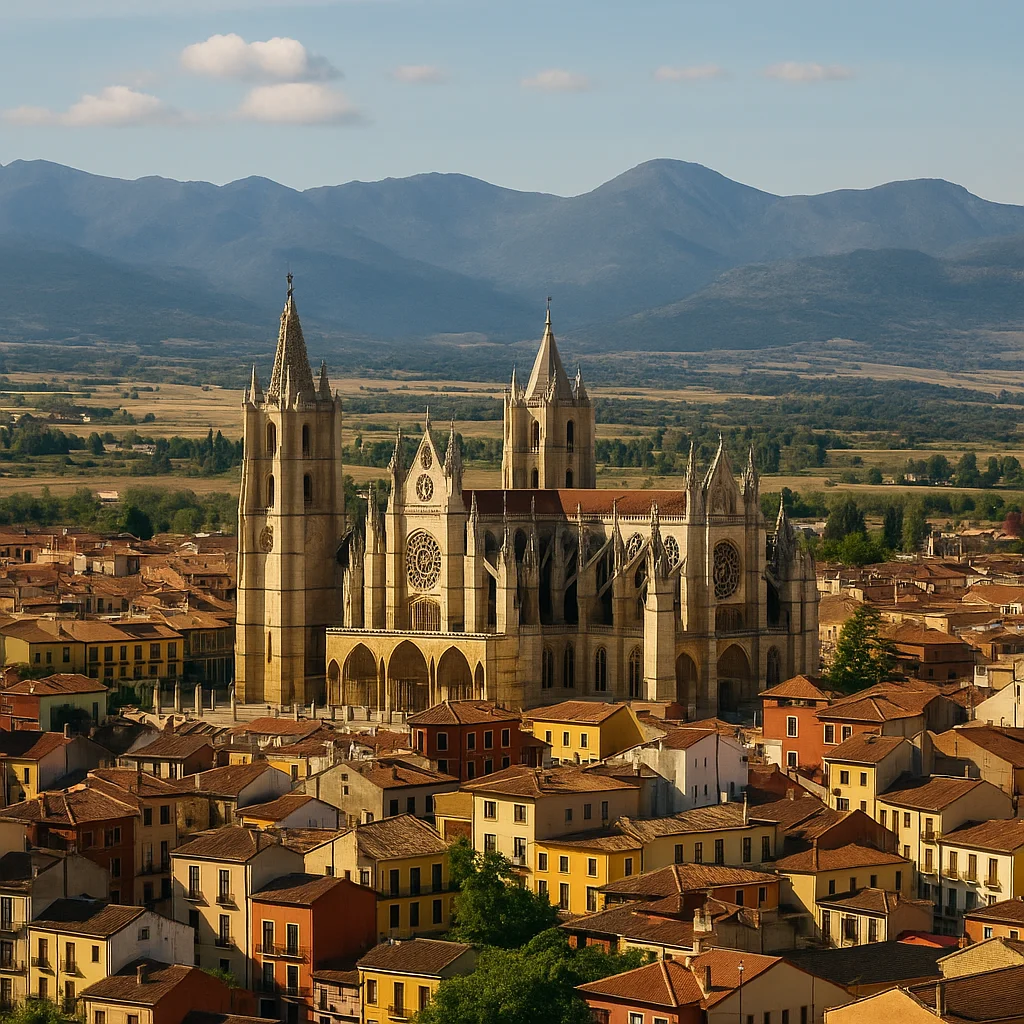
The Collegiate Church of San Isidoro in León is one of the most important monumental complexes in Spain and a landmark of European Romanesque art. Located in the historic centre of the city, next to the Roman walls, this site brings together an architectural complex made up of the basilica, the royal pantheon, the museum and the cloister.
Within the collegiate church, the cloister holds a special place: a space of silence and contemplation which, with its walls and arches steeped in history, becomes a key spot for understanding monastic and spiritual life in the Middle Ages in León.

The collegiate church as spiritual and cultural centre of León
The collegiate church was founded in the 11th century on the remains of an earlier monastery dedicated to San Pelayo. With the arrival of the relics of San Isidoro of Seville in 1063, it became one of the main religious centres on the Iberian Peninsula.
From that moment on, it was a place of reference for the Leonese monarchy, which chose it as a royal pantheon, and also for pilgrims on the French Way of the Camino de Santiago, who found spiritual refuge within its walls.
Over time, the collegiate church was not only a temple but also a centre of culture and learning, where manuscripts were copied, illuminated bibles were kept and the knowledge of the time was passed on. Even today it remains a living space, where religious worship, tourist visits and heritage conservation coexist.
The cloister of San Isidoro as a place of silence and beauty
The cloister of the collegiate church is one of the most evocative spaces in the monument. Its original function was to serve as a place of retreat for canons and religious, as well as a passageway to the different areas of the monastery.
It is a Romanesque cloister with later Gothic and Renaissance alterations. Its semicircular arches, columns and capitals feature vegetal and geometric motifs and biblical scenes, typical of medieval art. Walking through it is like entering a world where time seems to stand still.
Today the cloister houses part of the Museum of San Isidoro, displaying highly valuable pieces such as original capitals, medieval carvings, archaeological remains and liturgical objects. This museum use turns it into a space that combines contemplation and learning.
The cloister also surprises visitors with a unique restaurant located in its premises, where you can enjoy Leonese gastronomy in an incomparable historic setting. Eating in the cloister is an experience that brings together art, culture and traditional flavours under Romanesque arches.
Art and symbolism in the cloister
The cloister of San Isidoro not only served a practical purpose, it was also full of spiritual symbolism. It represented the earthly paradise, an enclosed garden where religious communities could meditate and prepare for monastic life.
On its capitals and reliefs you can still see scenes related to the Bible, the plant world and fantastic motifs, revealing the rich iconography of Leonese Romanesque art. Every detail contains a spiritual or moral message that helped guide the monks in their daily lives.
The cloister is also an ideal place to appreciate the fusion of architectural styles, since over the centuries Gothic and Renaissance elements were added, creating a space of great artistic richness.
The cloister as a living museum
Today the cloister forms part of the standard visitor route through the collegiate church. Its rooms house collections of great historical value, from Visigothic pieces to medieval relics, along with goldsmith’s work and codices.
Among the treasures on display are fragments of the ancient Roman wall, Romanesque capitals with biblical scenes, polychrome sculptures from the 13th and 14th centuries and liturgical objects that were used in religious ceremonies.
Visitors can walk around the cloister at their own pace, enjoying the harmony of the space while learning about the cultural importance of San Isidoro in the history of León.
San Isidoro and the Camino de Santiago
The collegiate church and its cloister were, for centuries, a stopping place for pilgrims on the French Way of the Camino de Santiago. Many of them came to venerate the relics of San Isidoro and found in the cloister a space of peace and reflection before continuing their journey.
Even today, San Isidoro is a key stop for walkers passing through León. The cloister and the collegiate church bear witness to the spirituality and hospitality that have characterised the Camino since the Middle Ages.
Conclusion
The Collegiate Church of San Isidoro in León and its cloister are an essential visit for anyone discovering the city. Their walls tell the story of a kingdom, of a spiritual centre and of an architectural jewel that has survived the passing of centuries.
The cloister, with its silence and beauty, offers visitors a moment of respite and direct contact with the medieval spirit. And to complete the experience, there is nothing better than enjoying lunch or dinner in its restaurant, where culinary tradition meets history.
📍 Your ideal base to visit the collegiate church and cloister
If you want to explore the Collegiate Church of San Isidoro and its cloister at your own pace, the best option is to stay in León’s historic centre. At León Apartamentos you’ll find fully equipped suites and holiday flats just a few minutes’ walk from the monument.
👉 Book at leonapartamentos.com and enjoy your stay with every comfort.