Sahagún is one of the most distinctive stops on the French Way. Between its brick-built churches, the remains of a once-mighty monastery and the wide horizons of Tierra de Campos, the town blends art, Camino spirit and rural life at a gentle pace. This expanded guide (with 2–3 paragraphs per section) helps you plan a perfect visit.

Why visit Sahagún
Come to Sahagún for its Mudéjar-Romanesque architecture: here, medieval builders fused brick techniques of Islamic tradition with Romanesque forms, creating towers, apses and arcades you won’t find elsewhere on the Camino. The result is a sober, elegant style that photographs beautifully and rewards slow looking.
The town also concentrates a great deal of history in a compact centre. The former Benedictine powerhouse of San Benito shaped markets, privileges and craftsmanship, leaving traces in street names, the urban layout and living traditions. You feel the Camino’s international heartbeat in cafés, small shops and greetings exchanged with pilgrims all day long.
Finally, Sahagún is the perfect place to feel the Meseta: big skies, wheat fields, golden sunsets and a silence that resets the mind. Culture, easy walks, hearty food and the friendly rhythm of the Camino make a very complete stop.
A short, useful history
The name links to San Facundo and the early monastic nucleus (9th–10th c.) that grew into the Royal Monastery of San Benito. From here, Cluniac influence radiated outward with royal protection, markets and a network of priories that brought artisans and wealth to the town.
The 12th–13th centuries were Sahagún’s golden age. The churches of San Tirso and San Lorenzo rose in brick; the settlement densified; defences strengthened; and the Camino de Santiago anchored a steady stream of people and ideas. That traffic explains the creative variety you’ll notice in brick patterns and structural solutions.
Later periods saw reforms, confiscations and the decline of monastic power, but the town preserved its monumental memory. The Arco de San Benito, fragments of wall and convent portals hint at the original scale and help you understand why Sahagún appears in every serious handbook on the Camino.
Must-see sights in Sahagún
Arco de San Benito & monastic precinct. This monumental gate is the surviving portal of the vanished monastery. Pause to imagine cloisters, guesthouses and workshops. Its proportions and ornament, plus the square around it, make a superb starting point for your walk.
Iglesia de San Tirso. The emblem of Mudéjar-Romanesque: brick façades with blind arches and friezes, and a distinctive, tiered tower. Late-afternoon light warms the brick tone; if the interior is open, you’ll appreciate the spatial restraint and didactic details.
Iglesia de San Lorenzo. “Sister” to San Tirso, with different solutions at the apses and portal. The compact massing and alternation of blind and open bays are a textbook translation of Mudéjar language to a Christian church.
Santuario de la Virgen Peregrina. The devotion underscores the town’s Camino link, and the viewpoint offers 360° over the plains. A small exhibit explains pilgrimage objects, trades and routes.
Puente Canto & River Cea. A classic riverside stroll among poplars and reflections—cooler on hot days and a fine place to end the afternoon in calm.
Two tips: (1) pair exteriors (for light and brick reading) with any interiors that are open; (2) keep a short list of must-sees and leave room to wander—Sahagún is best without haste.
The Camino de Santiago: where Sahagún fits
For pilgrims, Sahagún is a common end or start of stage. From the east you’ll arrive via Terradillos de los Templarios or Bercianos del Real Camino/El Burgo Ranero (depending on your plan). Westward, the trail heads to El Burgo Ranero or Mansilla de las Mulas before approaching León city.
Waymarking is clear through town and services are plentiful: hostels and small hotels, pharmacy, bike repair, ATMs and groceries. Terrain is flat, but the exposure to sun and wind demands forethought: water, hat and sunscreen even in spring and autumn.
Cyclists can design a two-part stop: a cultural morning in Sahagún and a gentle afternoon ride along the Cea valley. Surfaces are good and there are quiet farm tracks if you prefer to dodge traffic.
Festivals & traditions
San Juan de Sahagún (around 12 June) is the big patronal feast: liturgy, peñas, dances and activities for all ages. The saint—an Augustinian friar of the 15th century and patron of Salamanca—reflects devotions that travelled widely across Castile.
Late June brings San Juan & San Pedro with concerts, fairs and easy summer evenings. Terraces spill into streets, and the brick churches wear the long light of the year’s longest days.
In November, San Facundo & San Primitivo recall the monastic origins. The town’s pulse is more local: fewer visitors, colder air and seasonal kitchen—great for experiencing Sahagún’s everyday life.
Food & where to get it right
This is Tierra de Campos country: expect legume stews (beans, chickpeas) and spoon dishes that hit the spot when the weather cools. In season, lechazo (suckling lamb) and cordero are reliable choices, as are Leonese cured meats (cecina, chorizo) and cheeses from nearby valleys.
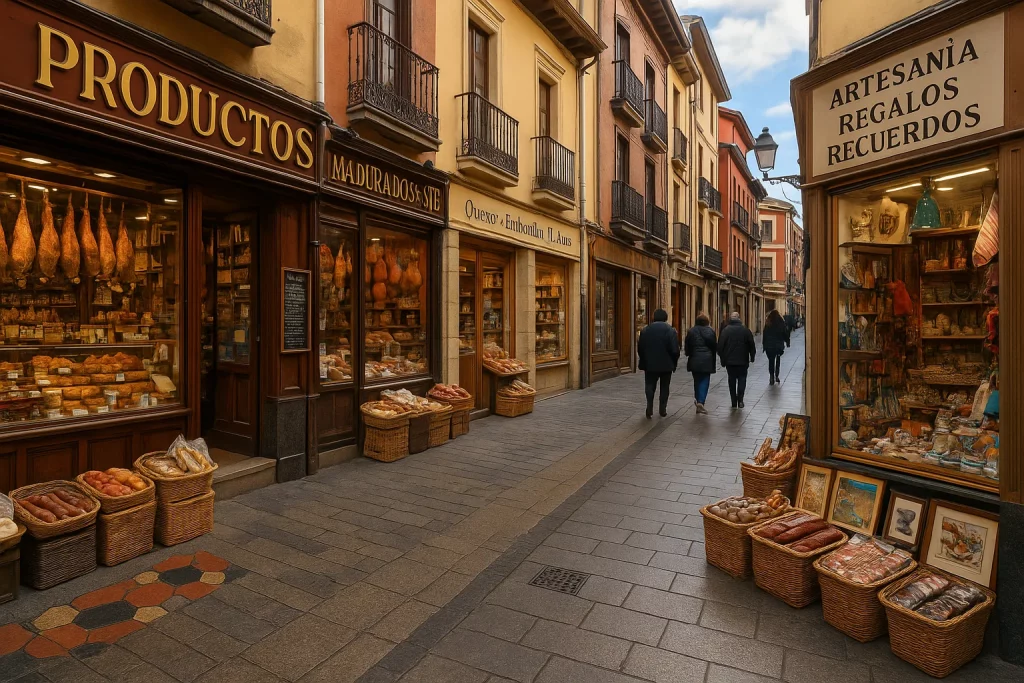
For a lighter lunch, the area around Plaza Mayor works well: classic raciones, tortilla, croquettes and newer takes. For dessert, look for hojaldres, amarguillos and other traditional pastries; with coffee they make an ideal bridge to your riverside walk.
Prefer a view? Book a dining room with windows toward the churches or a sheltered terrace. On busy weekends it’s wise to reserve; midweek, the town invites you to improvise and find small, honest set-menu spots.
Nature & nearby landscapes
Sahagún opens onto the cereal steppe—straight tracks, open skies and the kind of quiet that invites steady walking. If you enjoy flat rambles, you’ll love the play of light across fields as the day turns.
Birders should scan for great bustards, little bustards, kites and kestrels in season, plus grebes and ducks on nearby water bodies. Bring binoculars and respect crops and margins; many tracks are agricultural.
As an easy extension, explore surrounding villages of adobe and brick to read the vernacular architecture: simple portals, interior courtyards and shade solutions tailored to the Meseta climate.
Getting there & getting around
By road, Sahagún sits by the A-231 (Autovía del Camino de Santiago) and the N-120. It’s roughly 60 km from León city (about 45–55 min), with straightforward access. Tourist signposts and pull-offs allow quick photo stops of the churches.
By train, the town has its own station on the León–Palencia line, with regional services that make day trips feasible. Travelling with a bike? Check the bike policy for your chosen service in advance.
In the centre everything is walkable. Park and stroll—the best perspectives on San Tirso and San Lorenzo change with small shifts; moving ten metres to one side often gives you a new composition.
Suggested itinerary (1 day)
Morning. Start at the Arco de San Benito to set the context; cross to San Tirso and take your time with the elevations. Continue to San Lorenzo, then pause for coffee at Plaza Mayor and watch Camino life go by.
Midday. Climb the Santuario de la Peregrina (if the viewpoint is open) for a 360° over the plains. Then amble to Puente Canto for a cool stroll along the River Cea—the shadiest stretch on hot days.
Afternoon. Return via back streets, browse local products, and catch the brick in golden hour back at San Tirso. Early dinner—stews or shared plates—and, if you continue the Camino, prep water and snacks for tomorrow’s stage.
Practical tips
Light is your ally: brick gains texture in golden hour and looks wonderful under broken cloud. Avoid the high noon sun in summer for exteriors and favour interiors or a small museum if access is available.
In winter the Meseta can be frankly cold—layers, hat and gloves make lingering outdoors much more pleasant. In summer, think water, hat and sunscreen; wind is welcome but drying.
Respect active churches: check visiting rules, avoid flash if prohibited and dress modestly. If you intend to fly a drone, confirm local regulations and any airspace restrictions.
Where to stay to see Sahagún (and the rest of León)
If you want to base yourself in León city and take day trips to Sahagún (plus Astorga, Valporquero, El Bierzo…), choose León Apartamentos. Our places are central, fully equipped and with kitchens, ideal for walking to the Cathedral, the Barrio Húmedo and the stations, then heading out by car or train across the province.
Book direct for the best price (no commissions) and personalised help with routes, timetables and recommendations to complete your cultural trip. Direct booking—feel at home while you explore at your own pace.